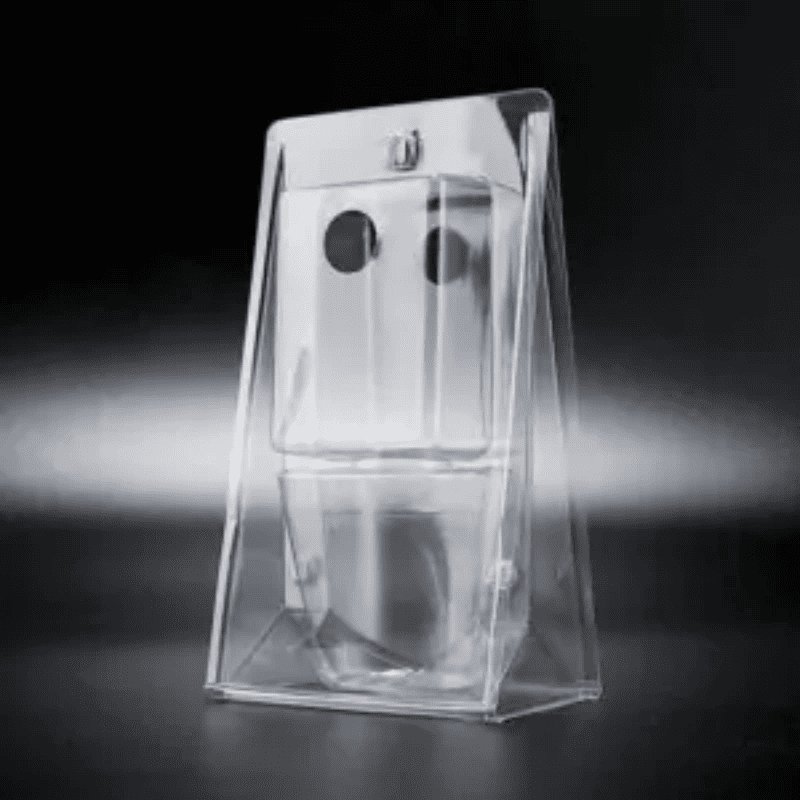
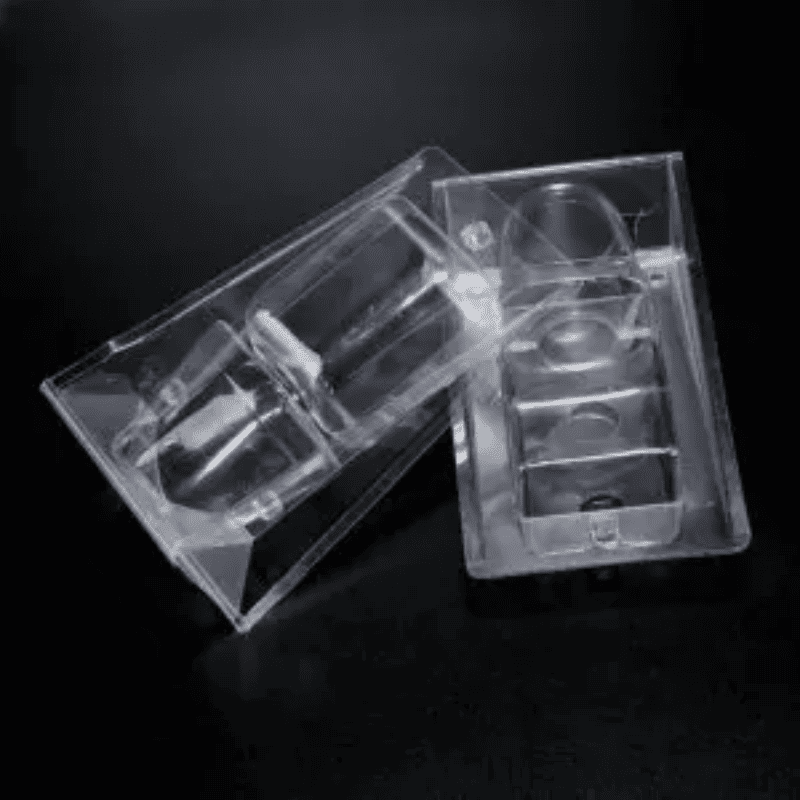
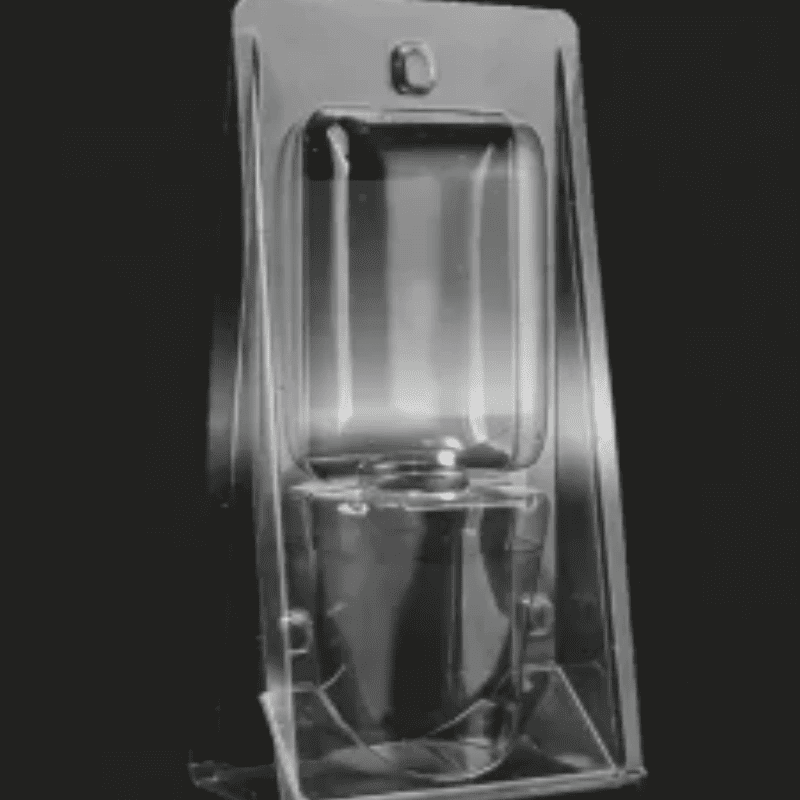
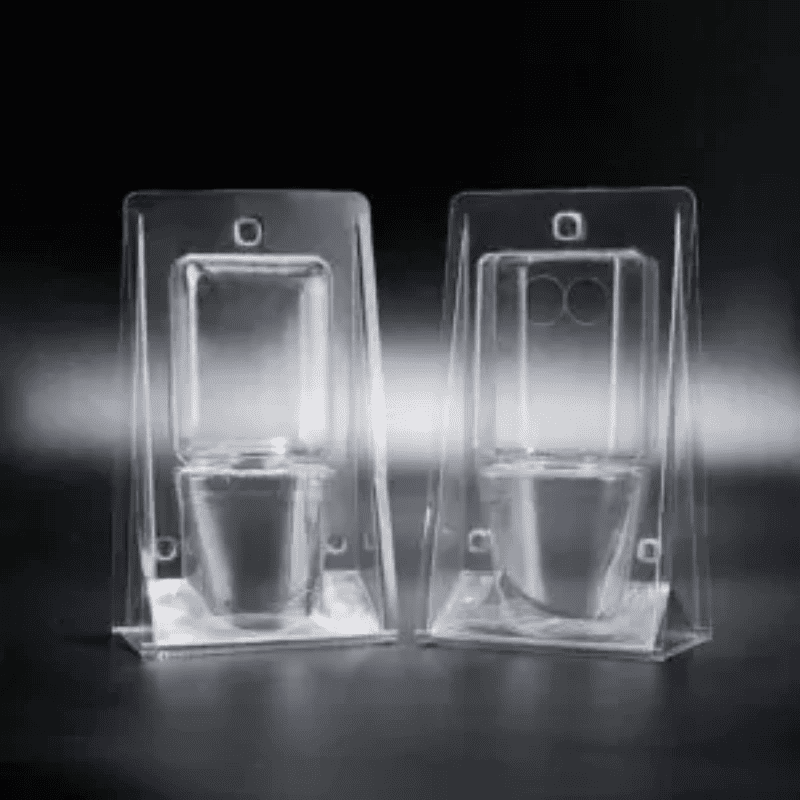

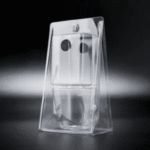
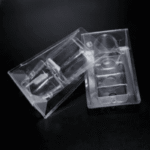
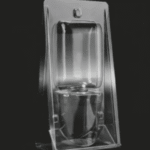
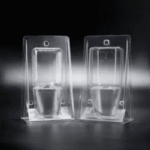
PVC Blister Box
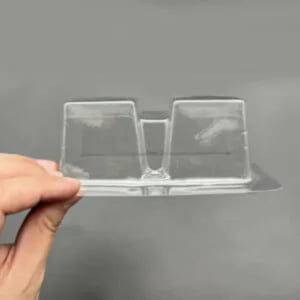
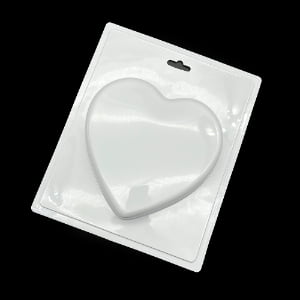
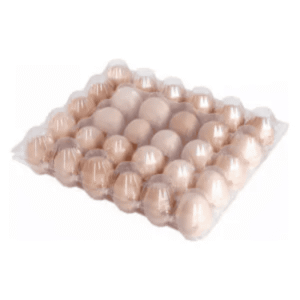
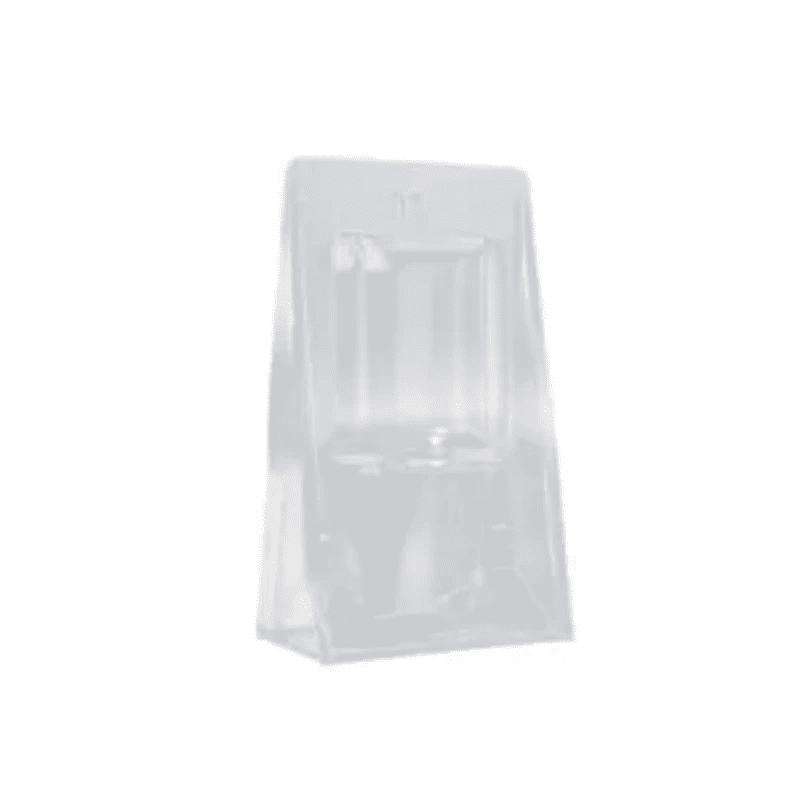
PVC thermoforming refers to the process of shaping PVC sheets into blister products—such as blister trays and boxes—using vacuum thermoforming technology. PVC sheets are characterized by their high toughness and inherent flame resistance; however, combustion releases chlorine gas, which poses a certain environmental impact. PVC is easily heat-sealable—compatible with both standard sealing machines and high-frequency edge-sealing equipment—making it a primary raw material for the production of transparent blister products. As a widely utilized and highly popular material, PVC film is broadly categorized into two types: eco-friendly and non-eco-friendly. It can be fabricated into a diverse array of blister packaging products—including transparent, colored, anti-static, metallized, and flocked varieties. Its key attributes include high transparency, excellent surface gloss, minimal crystal points and flow lines, broad applicability, strong impact resistance, and ease of formability. Consequently, these products are extensively employed as external packaging for a wide range of goods, including toys, food items, electronic devices, pharmaceuticals, electrical appliances, gifts, cosmetics, and stationery.
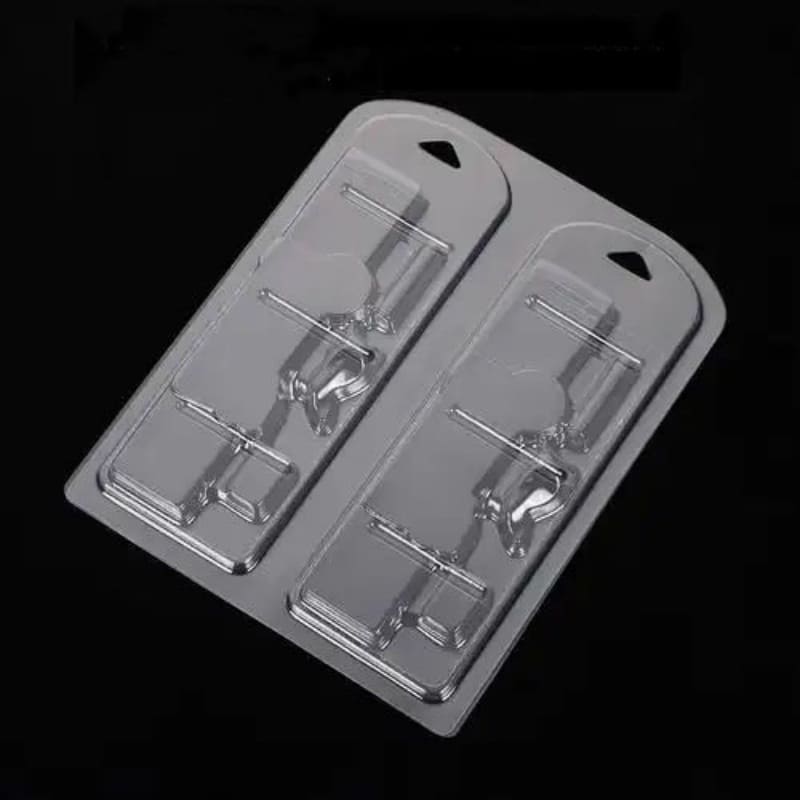
Advantages of Fold-Over Blister Packaging
1.Offers the best display effect:Fully transparent on both the front and back, it offers a 360-degree view of the product, exuding a premium, high-end aesthetic.
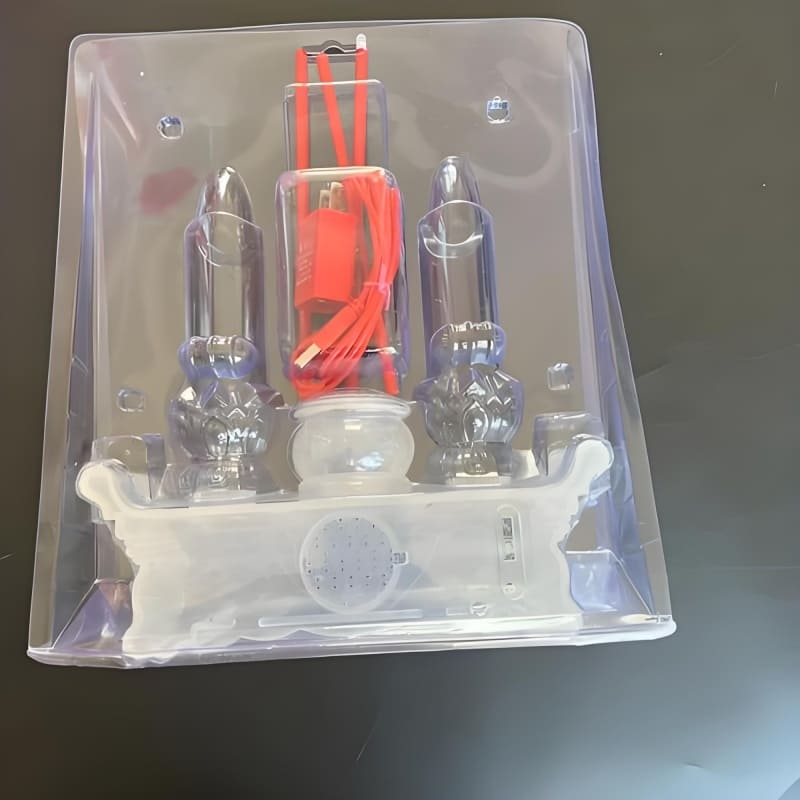
2.Highly Protective:Features a fully enclosed structure that provides protection against shocks, scratches, and bumps—ideal for delicate or valuable products.
3.The appearance is neat and crisp:Fuller in appearance than a tri-fold blister pack, offering excellent shelf display impact.
4.Good sealing performance:Radio-frequency heat sealing ensures a secure closure that is tamper-evident and tamper-resistant.
5.Wide range of applications:Toys, stationery, hardware, auto parts, small appliances, and beauty tools are all commonly used items.
6.You can make it without using paper cards:Saves on paper card costs and is more eco-friendly.
Disadvantages of Fold-Over Blister Packaging
1.The cost is higher than that of a slide-in blister pack:Requires substantial materials, complex molds, and numerous processing steps.
2.High equipment requirements:A large-format blister packaging machine combined with a high-frequency welder or heat sealer is required—making this a difficult undertaking for a small-scale factory.
3.Strict requirements for dimensional accuracy:After folding, the upper and lower blister shells must be perfectly aligned; any misalignment will look unsightly.
4.The product must not be too thick or too heavy:If it is too thick, it will not close tightly and may bulge; if it is too heavy, it is prone to deformation and cracking at the seams.
5.Small batches are not cost-effective:Startup and machine setup costs are high; for small-volume orders, the unit price is expensive.
6.The edges tend to whiten and thin out:In deep-cavity products, the fold lines are prone to excessive stretching.
FAQ
1.Is a paper card absolutely necessary for a fold-over blister pack?
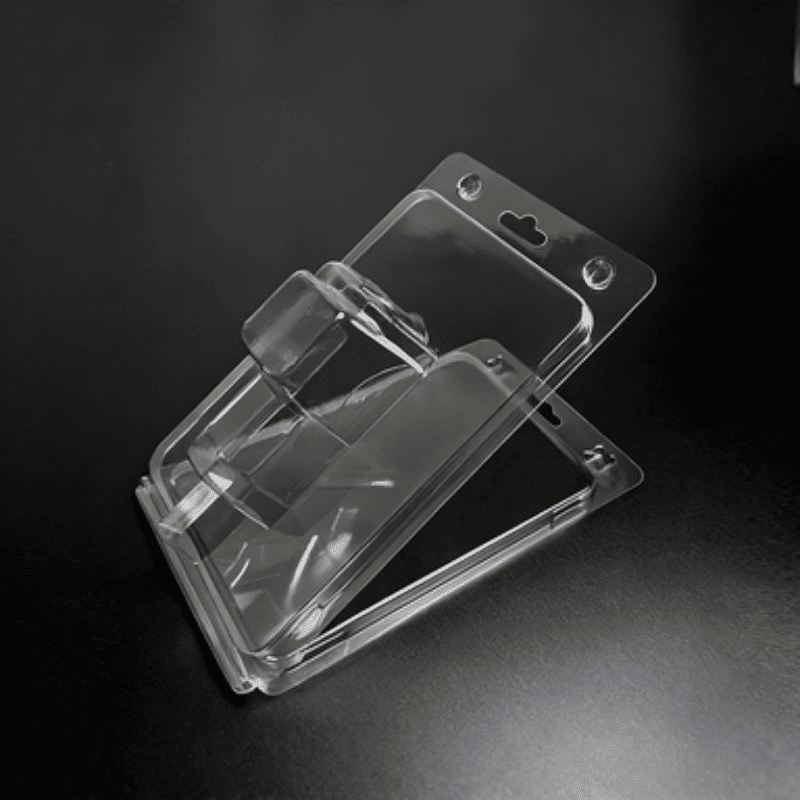
Not necessarily.You can simply fold it in half—no paper insert required—and seal it directly.Alternatively, you can insert a paper card in the middle to enhance your brand presentation.Simply choose the option that best suits your product and budget.
2. What materials are used for bi-fold blister packaging?
PETG and PVC are commonly used; for exports, eco-friendly PETG is preferred.
3.Can a hanging hole be added?
Yes.A hanging hole can be reserved at the top of the fold-over blister pack to support hanging display in supermarkets.